
Buzz Off
Time to re hive the bees

In the bee-ginning there were only puns. Yesterday we said goodbye to our little garden helpers, otherwise known as the ‘Backstreet Bees’ - the unrealised name for our honey brand. We had created a space for them right down the back of our property and there was a long nature corridor to get there, so ‘Backstreet Bees’ felt right, we had planned on getting multiple hives and naming them according to the Backstreet Boys reference - I guess in WA the first hive might be Backstreets Back…alright!? I may come back to it. The colony has been stirring after spending winter in a compact little ball in their central frames. I was close to putting the super on the hive, perhaps there would be an early nectar flow and I could harvest some honey, but, given the house is going on the market this week, I decided against it. A super is the box you stack on top of the bees ‘house’ box where they deposit extra honey and the queen doesn’t lay eggs (if you remember to put the queen excluder between the boxes).
It’s been a short run with the bees so far. I only looked after them in the off season, I got them in mid summer last year, so didn’t take any of their honey while they were building up their stores and strengthening their colony. Then they snuggled down for winter. Before we decided to move I was planning on going full medieval and making mead this year.
I had my local beekeeping mentor Fiona come and do the transfer off the property so I could see how it was done. The process takes advantage of the bees own area mapping skill.
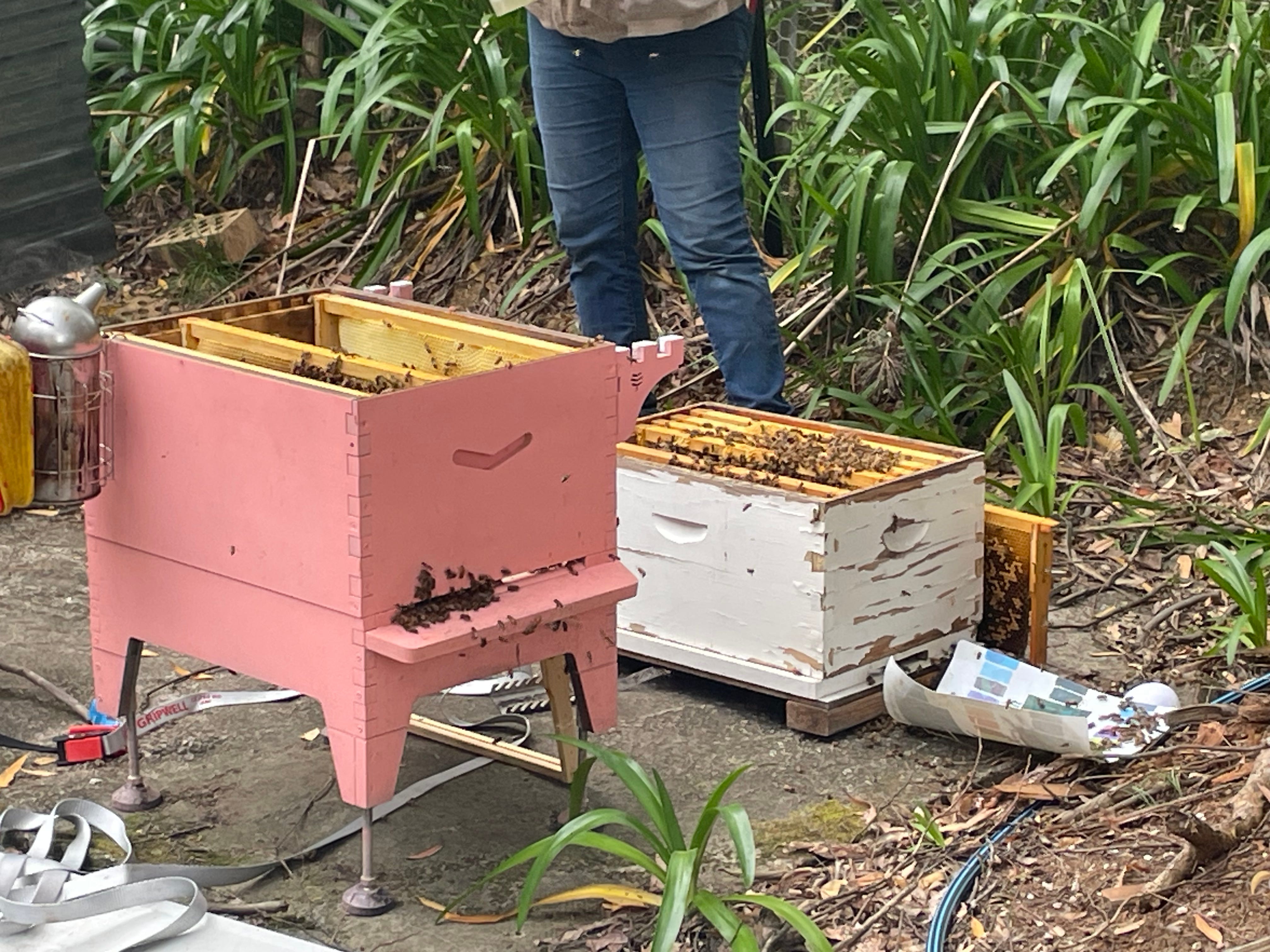
First, you take another box and place it next to the hive, about two feet away. It’s very important that the hive entrances face the same way. Then one by one you move the frames from the box into the hive. It is important that the frames go into the box in the same order and orientation so that the bees don't get confused. Imagine if you had your house relocated but the kitchen and bedroom were swapped around, you might wonder if it was still your house.
Bees have an incredible ability to map an area and share that information with the hive. Returning foragers do a waggle dance to point in the direction of good nectar/pollen. They travel up to five miles in a day looking for the best plants, and if you stand near the hive and watch them, they set up flight paths into and out of the hive entrance every day so you know where they’re heading.
One final piece of the puzzle, that actually comes first (like finding the corners if you like), is the queen. The hive will follow the queen, so one of the first things to find when moving the hive is where she is. Usually they are marked with a little paint dot (colour coded to indicate the year - they live for 3-5 normally), this was not so in my case. Due to the heavy rain my hive was dealing with a mild case of chalk brood (have a google), and Fiona discovered they had replaced my original marked queen! Luckily Fiona was able to spot her easily and her frame was one of the first moved.
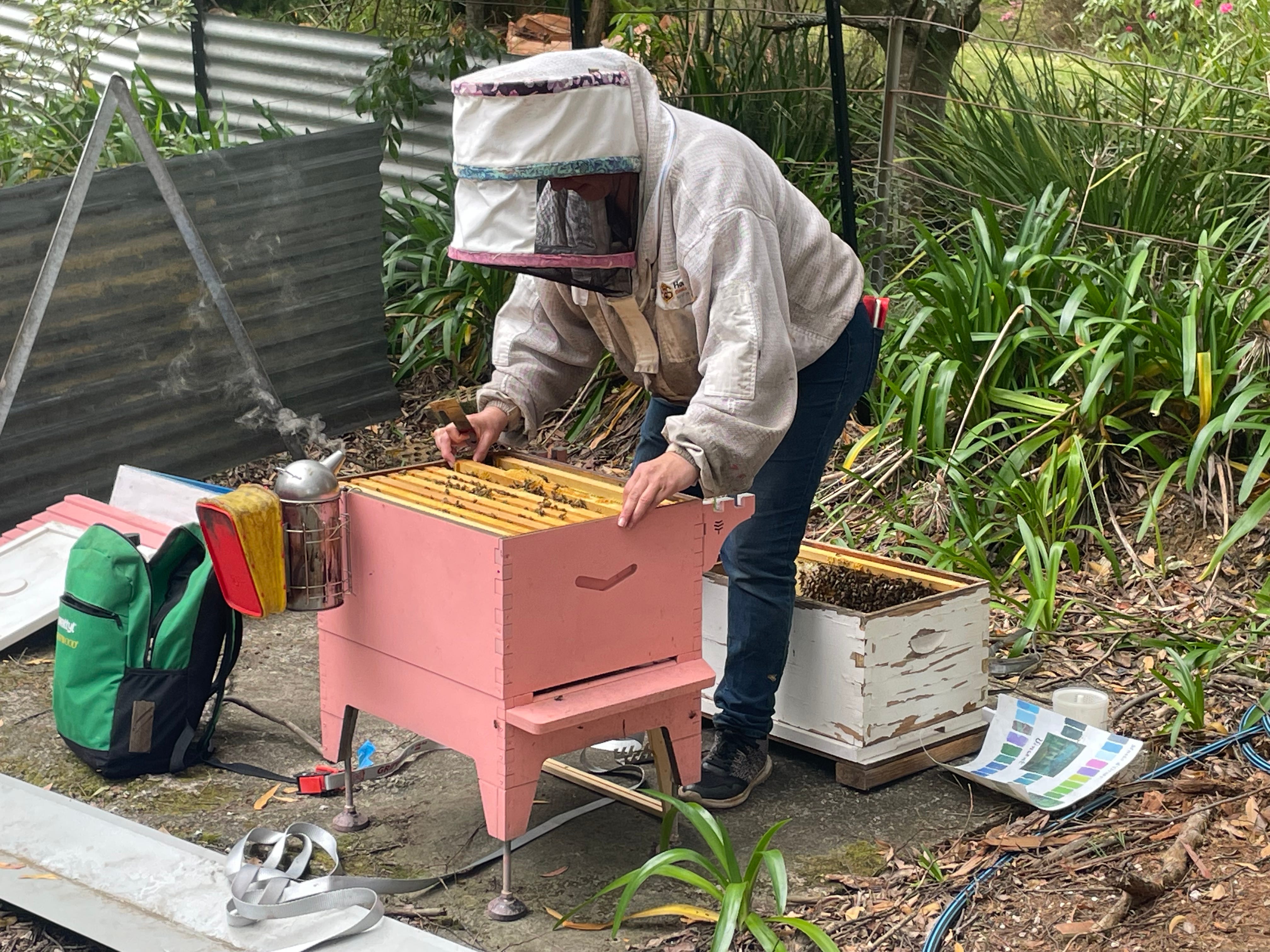
It is important to say here that I wear significantly more protection when I handle bees than Fiona. She is a professional and you can find her site here. Not wearing gloves allows her to handle the queen without squashing her with big gloved fingers. Thankfully my bees are fairly calm so I don’t think she was stung in the process. The smoker, seen below hanging on the side of the hive also helps to calm the bees, just make sure the smoke isn’t hot, they don’t like that.
Once all the frames are in the travel box, the hive is left with the lid off at a weird angle. Kind of like turning the house sideways so it is less appealing to go back into. Fiona left the bees for a few hours and came back in the evening when they’d all found their way into their new home and were ready to be transported. Oh, and she left us a few jars of her fabulous honeys, both raw and the flavoured varieties she makes - chocolate and hemp!
I feel I haven’t had a good crack at beekeeping yet and I’m keen to give it another go on the other side of the country. My hive will go to be irradiated - gamma radiation apparently - in the next couple of weeks so we can safely travel it to the west coast and get back to that mead project.
For now we’ll just have to wait until…. ‘Oh my god, we’re back again…’